How To Update Your Home To Be Energy-Efficient: Promoting a healthier Lifestyle
Upgrading your home to be more energy-efficient isn’t just good for the environment; it also improves your comfort, lowers utility bills, and creates a healthier and more sustainable living space. Here’s some practical guidance for updating your home with sustainability in mind.
1. Utilization of Energy Efficiency, combined with Passive Design
Sustainable homes are specially designed to reduce energy consumption by taking advantage of natural conditions; key strategies include:
- Optimizing your home’s orientation for sunlight and prevailing winds
- Improving natural light and ventilation
- Reducing the need for mechanical heating and cooling
These passive home design strategies can significantly lower energy use year-round, yielding year-after-year savings for the Homeowner.
2. Choose Sustainable Materials
The materials you select have a big impact on your home’s environmental footprint; consider:
- Bamboo and other rapidly renewable materials
- Recycled steel and other recyclable products
- Low-VOC (low-toxicity) paints
- Locally sourced materials to reduce transportation emissions
Choosing materials with lower embodied carbon also helps reduce the overall environmental impact of your renovation.
3. Focus on Water Conservation
Water-efficient upgrades make a real difference in Canadian homes; some options include:
- Rainwater collection systems
- Greywater recycling
- Low-flow fixtures
These strategies help reduce water usage and promote more responsible resource management.
4. Improve Indoor Air Quality and Comfort
A healthy, sustainable home prioritizes the well-being of the people living in it. Poor indoor air quality can contribute to “sick building syndrome,” which is linked to improper ventilation, toxic materials, and limited connection to nature. Focus on:
- Good ventilation (including HRV or ERV systems)
- Natural light
- Thermal comfort
- Non-toxic finishes and materials
5. Explore Advanced Sustainable Standards
Two important standards worth knowing about:
- Passive House: Focuses on high levels of insulation, airtight construction, no thermal bridging, high-performance windows, and mechanical ventilation with heat recovery (HRV/ERV).
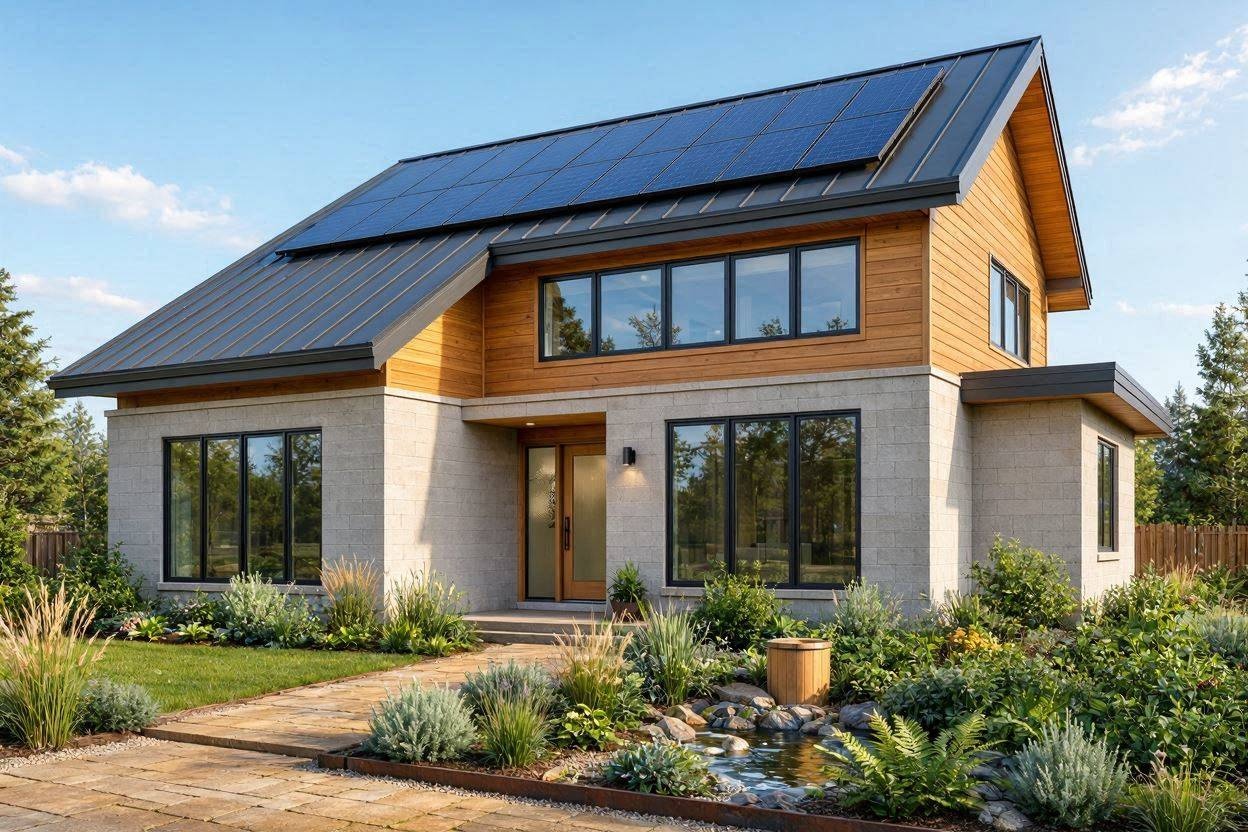
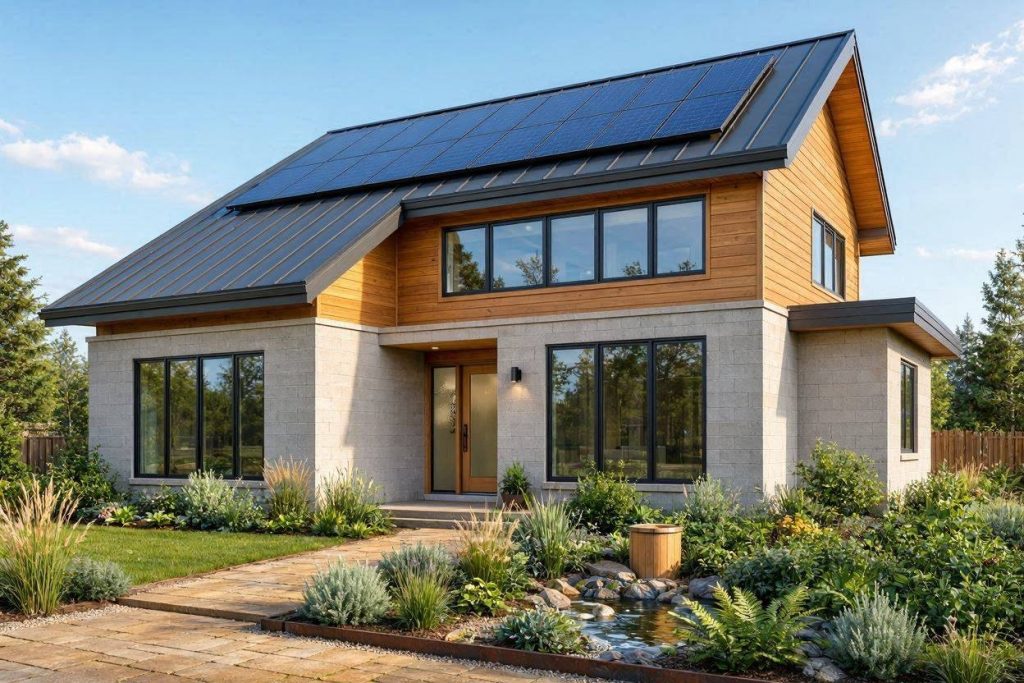
- Net Zero: Aims to produce at least as much energy as the home uses, usually through solar panels or other renewable energy sources.
Other useful strategies include:
- Solar tubes and light shelves
- Clerestory windows
- Thermal mass (such as a Trombe wall)
- Green roofs and terraces
- Biomimicry — using nature as inspiration for more efficient design
6. Think Holistically: Economic + Environmental + Social
True sustainability balances three key areas:
- Economic – Lower long-term energy and maintenance costs
- Environmental – Reduced energy use and carbon footprint
- Social – Healthier, more comfortable living spaces
When these three work together, your home becomes more efficient, more valuable, and better to live in.